A Fall Cleanup Plan for Cedar Falls Iowa Homeowners
October in Cedar Falls moves fast. One week the maples along Overman Avenue are still holding color, and the next the gutters are packed and the lawn is buried under a foot of wet leaves. For homeowners in Black Hawk County, fall cleanup is not optional maintenance you get to if time allows — it is the difference between a yard that comes back healthy in April and one that spends spring recovering from mold, suffocation, and winter injury. This guide walks through every step of a practical fall cleanup plan built for the Cedar Falls climate, from the last full mow through final winterization tasks.
Why Fall Cleanup Matters More in Iowa Than You Might Think
Iowa's transition from fall to winter is abrupt and unforgiving. Cedar Falls sits in a region where temperatures can swing from the mid-60s to below freezing within a single week in late October or November. That volatility creates specific problems for lawns that have not been properly prepared.
Leaves left on the lawn mat down under the first wet snow and create a dense anaerobic layer that blocks light and traps moisture against the grass canopy. This is a reliable recipe for snow mold — a fungal disease common across Black Hawk County that shows up in gray or pink patches once the snow melts. Kentucky bluegrass and fescue lawns, which make up most residential turf in Cedar Falls, are particularly susceptible. A thorough leaf removal program before the first significant snowfall is one of the most effective things a homeowner can do to prevent it.
Beyond disease, matted leaves contribute to thatch buildup, disrupt overseeded areas trying to establish before dormancy, and make spring cleanup exponentially more difficult when decomposing material has frozen into the turf over winter.
Building Your Fall Cleanup Timeline in Cedar Falls
Timing in Cedar Falls follows the natural rhythm of the growing season, but there are specific windows that matter. Use this framework to structure your fall cleanup from early October through mid-November.
Early October: Assessment and Prep Work
Walk your property and take inventory. Note areas with heavy tree coverage — especially oak and silver maple, which are late droppers — because those zones will need the most attention in November. Check your equipment now rather than waiting for the first cold weekend. Blower tubes, mower blades, and rakes that need attention should be sorted before peak cleanup season hits.
This is also the right time to evaluate your lawn's condition heading into winter. Thin spots, compacted soil in high-traffic areas, and bare patches from summer drought stress are all worth noting. Some of these issues can still be partially addressed in early October if you act quickly.
Mid-October: Aeration and Overseeding Deadline
If you have not aerated yet, mid-October is your last practical window in Cedar Falls. Core aeration relieves compaction and improves water and nutrient penetration before the ground hardens. Pair it with a fall fertilizer application — typically a higher-potassium formulation — to support root hardening and winter hardiness.
Overseeding after aeration works best when soil temperatures are still above 50°F, which typically holds through the first week or two of October in northeast Iowa. After that, germination becomes unreliable. If you missed the window this year, add it to your early September schedule for next fall.
Late October: Final Mow and Leaf Management
Your final mow of the season matters more than most homeowners realize. Cut your lawn down to approximately 2.5 inches before dormancy. Leaving grass too long heading into winter creates conditions where snow mold, vole activity, and matting are all more likely. Cutting too short before freeze-up stresses the turf and reduces cold hardiness.
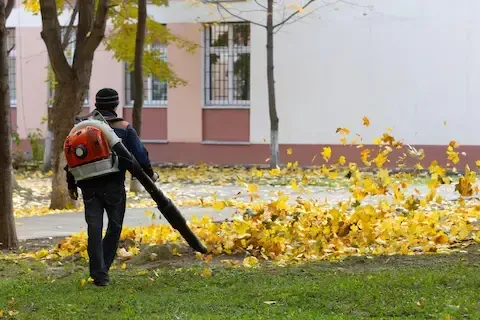
Leaf management in late October focuses on keeping up with drop volume so you are not burying the lawn. Mulching leaves directly into the turf with a mulching blade can be effective when leaf cover is light — generally when you can still see grass between leaves. Once the leaf layer becomes dense, bagging and removal is the better call.
For homeowners near the Cedar Falls greenway or properties with significant mature tree coverage on College Street or along West Ridgeway, leaf volume can be substantial enough to warrant multiple passes per week during peak drop. Staying ahead of it is far easier than tackling a deep compacted layer after the fact.
Early November: Final Leaf Removal Push
Oaks are the last trees to drop in Cedar Falls, often holding leaves into early November. Your final leaf removal pass should happen after oaks have dropped but before the first snow sticks and stays. This is the cleanup window that most often gets skipped, and it is the one that leads directly to spring mold problems.
If you are having professional Fall Cleanup services completed, schedule them for this window. A crew working with commercial blowers and vacuum systems can process a full-yard leaf removal in a fraction of the time it takes with residential equipment, and they can time the visit to follow the last significant drop.
Iowa Winterization: What Belongs in a Cedar Falls Fall Cleanup Plan
Winterization in Iowa means preparing your lawn and landscape systems for a hard freeze that typically arrives in November. Several tasks fall under this category that homeowners often treat as separate projects but work best when integrated into the fall cleanup timeline.
Irrigation Blowout
If your property has an in-ground irrigation system, the blowout must happen before the first hard freeze — generally defined as a sustained temperature below 28°F. In Cedar Falls, that can arrive as early as late October, though it is more common in November. Do not wait until you see freeze warnings in the forecast; irrigation contractors book up quickly when cold weather approaches. Schedule your blowout in early to mid-October as a standard annual task.
Perennial and Ornamental Bed Prep
Cut back perennials after the first killing frost, which shuts down above-ground growth. Leave ornamental grasses standing through winter if you prefer the aesthetic — they provide structure in the landscape and offer some habitat value — but plan to cut them back to 4 to 6 inches in late February before new growth emerges.
Apply a 2 to 3 inch layer of mulch around the base of any woody perennials, shrubs, or newly planted trees. This moderates soil temperature fluctuations, which are more damaging to root systems than steady cold. Black Hawk County's freeze-thaw cycles through November and March are particularly hard on shallow-rooted plants that have not been mulched.
Gutter Cleaning
Gutters packed with leaves cause ice damming when temperatures cycle above and below freezing in November and December. Clean gutters after the final leaf drop — early November is typically the right window — to ensure water can drain freely before ice formation begins. This is a straightforward task that prevents expensive water damage to fascia and rooflines over the winter months.
Common Fall Cleanup Mistakes Cedar Falls Homeowners Make
Even homeowners who make an effort at fall cleanup often leave gaps that create problems the following spring. Here are the most common patterns worth avoiding.
Stopping after one leaf removal pass. If your property has mature deciduous trees, a single mid-October cleanup leaves a significant volume of leaves to mat down through November. Plan for at minimum two passes — one in mid to late October and one in early November after oaks drop.
Skipping the final mow height adjustment. Leaving grass at summer mowing height going into winter is a consistent contributor to snow mold. Drop to 2.5 inches before dormancy regardless of how late in the season it is.
Postponing irrigation blowouts. Every year in Cedar Falls, homeowners wait too long on irrigation blowouts and end up with cracked manifolds or damaged heads when an early freeze arrives. This is a preventable repair cost.
Over-applying fall fertilizer. A fall application supports root hardening, but applying nitrogen too late — after mid-October in most Cedar Falls growing seasons — can push weak top growth that gets damaged by frost. Time your application to be fully absorbed before the lawn goes dormant.
Working with Local Conditions on Cedar Falls Properties
Cedar Falls properties vary considerably in their fall cleanup demands. Older neighborhoods near downtown — College Hill, the University Avenue corridor, and the residential streets west of the University of Northern Iowa campus — are typically lined with large, mature trees that generate heavy leaf loads. Newer developments on the east side and in the growth areas off Rainbow Drive tend to have younger tree canopies and lighter leaf volume.
The Cedar River floodplain areas and properties near the greenbelt also deal with additional organic debris — seed pods, cottonwood fluff late in the season, and debris deposited by water movement during fall rain events. If your property is in a low-lying area that collects water, plan for at least one additional cleanup pass after a significant fall rain event. You can read more about managing that type of debris in this guide to cleanup after rainy weeks.
Wind is also a significant factor in northeast Iowa fall cleanup. Cedar Falls gets consistent northwest winds off the open farmland west of the city, which means leaves migrate across yards well after trees have dropped. Leaves from your neighbor's oak or the row of ash trees lining a nearby street can repopulate a clean yard within a day or two. Budget time for a follow-up check in the week after your final cleanup pass.
Setting Your Yard Up for a Strong Spring Start
A well-executed fall cleanup plan is essentially a gift to your spring lawn. When snow melts in March and soil begins to warm, a yard that went into winter clean — leaves removed, final mow completed, irrigation winterized, and beds mulched — emerges with far fewer problems than one that was left unmanaged.
Snow mold recovery, vole tunnel repair, and spring debris clearing are all tasks that can take weeks of effort and delay the start of the growing season. A November afternoon spent completing the final fall cleanup pass saves that time in April when good growing conditions are limited and every week of the mowing season matters.
Cedar Falls homeowners who build fall cleanup into their annual schedule as a defined, multi-step process — not a single one-afternoon job — consistently see better turf performance year over year. The Iowa climate does not forgive shortcuts taken in fall, but it rewards the straightforward work of preparing your lawn properly before the ground freezes.
