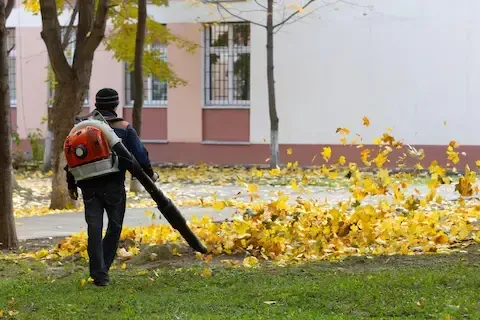
Cedar Falls Fall Cleanup Timing Before First Frost
Timing is everything when it comes to fall yard work in Cedar Falls. Get it right and your lawn enters winter dormant, clean, and ready to bounce back in spring. Get it wrong and a mat of wet leaves sits on your turf through December, smothering grass crowns and creating the exact conditions that invite disease, mold, and bare patches. Understanding when and why to act is the first step toward a healthier yard next year.
What the First Frost Actually Means for Your Lawn
Cedar Falls typically sees its first hard frost in mid-to-late October, though the exact date shifts year to year. A hard frost — temperatures at or below 28°F for several hours — signals the end of active turf growth for the season. But the grass does not simply stop functioning overnight. Cool-season lawns like the tall fescue and Kentucky bluegrass common in Black Hawk County continue slow metabolic activity well into November as long as the soil temperature stays above roughly 50°F.
This window between the first frost and true dormancy is meaningful. Your lawn is still pulling nutrients downward into root systems, which is exactly why late-season fertilizer applications matter and why clearing debris before this window closes makes a real difference. Leaves and organic material left on the surface block light, trap moisture, and compete with the turf's final weeks of autumn recovery.
The Leaf Problem in a Northeast Iowa Fall
Cedar Falls neighborhoods are full of mature oaks, maples, elms, and ash trees. Beautiful in September and October, those trees drop an enormous volume of leaves over a short period — often compressed into a two or three week window in late October and early November. One mature oak can drop enough leaves to cover a typical residential lawn two to three times over.
When those leaves get wet from fall rains and begin to mat down, they form a physical barrier. Sunlight cannot reach the grass blades below. Air circulation stops. Soil moisture builds up without evaporating. In those conditions, fungal activity increases rapidly, and grass crowns that should be hardening off for winter instead sit in a wet, dark environment that causes them to weaken or rot. The damage does not always show up immediately — you might not see the bare patches until April, by which point the window to prevent the problem has long passed.
When to Schedule Your Cedar Falls Fall Cleanup
The practical answer is that you want the bulk of your fall cleanup completed between mid-October and mid-November. That window accounts for peak leaf drop in the area while still leaving enough time before the ground freezes hard and conditions become miserable to work in.
Waiting until all leaves have fallen sounds logical, but in reality the last stragglers — especially from oaks — can hang on well into November. By then temperatures in Cedar Falls routinely drop below freezing overnight, the leaves are wet and heavy, and any leaves that have been sitting since October have already started to cause damage. A better approach is a first pass in mid-to-late October when the majority of leaves are down, followed by a second lighter pass in early November to catch the latecomers.
Mowing the lawn one final time before cleanup also matters. A final mow height of around two and a half to three inches — slightly lower than summer height — reduces the surface area where debris accumulates and lessens the risk of snow mold over winter. Do not scalp the lawn; shorter is not better here. The goal is to avoid leaving grass long enough that it mats under snow cover.
Gutters, Beds, and the Rest of the Cleanup Picture
Fall cleanup in Cedar Falls is not just about the lawn. Landscape beds holding a thick layer of leaf debris through winter create overwintering habitat for pests and the same moisture-trapping conditions that damage turf. Perennial beds benefit from a trim and a light clearing before hard frost, though some homeowners choose to leave ornamental grasses and seed-head plants standing for winter interest and wildlife value — a reasonable choice as long as the material is managed before it breaks down into a compacted layer.
Gutters deserve attention in the same timeframe. A blocked gutter during fall rains and early snowmelt sends water sheeting down exterior walls and pooling against foundations. If you are having your lawn and beds cleaned up, pairing that with a gutter clearing is an efficient use of the same service window.
For properties along the Cedar River corridor or in older Cedar Falls neighborhoods with dense tree canopies, the volume of leaf drop can be heavy enough that a single cleanup pass is genuinely insufficient. Planning for two visits rather than one is realistic, not excessive.
Why Getting Ahead of the Hard Frost Protects Your Investment
A lawn in Cedar Falls that goes into winter with good turf density and no smothering debris layer is a lawn that requires less intervention in spring. Bare patches mean overseeding, which means timing soil temperatures, watering, and waiting. Disease spots from winter mold mean fungicide applications and patience. Neither outcome is catastrophic, but both cost time and money that could be avoided entirely with cleanup done in the right window.
If you want a head start on planning, reviewing our fall cleanup plan gives you a property-level checklist matched to local timing. And when you are ready to stop doing it yourself and hand the work off, professional Fall Cleanup service covers leaf removal, final mowing, bed clearing, and everything else the season demands before conditions turn.
A Closing Note on Timing Decisions
There is no single right day on the calendar. Fall cleanup timing in Cedar Falls is about reading the season, watching the trees on your specific block, and acting before the combination of wet leaves, dropping temperatures, and early frosts conspires against your turf. Mid-October through mid-November is your window. Use it deliberately and your lawn will be in a stronger position when March arrives and the ground thaws than if you let the cleanup slide into late November or skip it altogether.
